4 hr
Kicking Horse River Whitewater Rafting
- Entry ticket
- Mobile voucher
- Valid same day
- Free cancellation
Kicking Horse Rafting Banff — Whitewater Adventures from Golden
Class IV rapids through glacier-fed canyons, one hour west of Banff
Compare fares, pick the fit — all bookings are mobile-voucher and eligible for free cancellation where shown.
4 hr
4 hr
4 hr
Selecting the right kicking horse rafting banff experience depends on your appetite for thrills as you navigate the glacial-fed waters of the Canadian Rockies. These kicking horse rafting banff tours range from family-friendly scenic floats to intense whitewater canyon adventures.
| Classic Whitewater Mid-Level Intensity |
Top pick Full Day Expedition Summit Access & BBQ |
|
|---|---|---|
| Rapids Intensity | Class 2-4 | Class 3-4 |
| Duration | 3 hours | 5 hours |
| Best For | First-time rafters | Adventurous thrill-seekers |
| Included Gear | Wetsuit & splash jacket | Wetsuit & BBQ lunch |
| Access Method | Commercial operator booking | Commercial operator booking |
| See tickets & prices |
Verdict: First-time visitors should choose the Classic Whitewater kicking horse rafting banff tour for a balanced introduction to the river's famous rapids and canyon scenery.
Worth it for thrill-seekers and rafting enthusiasts
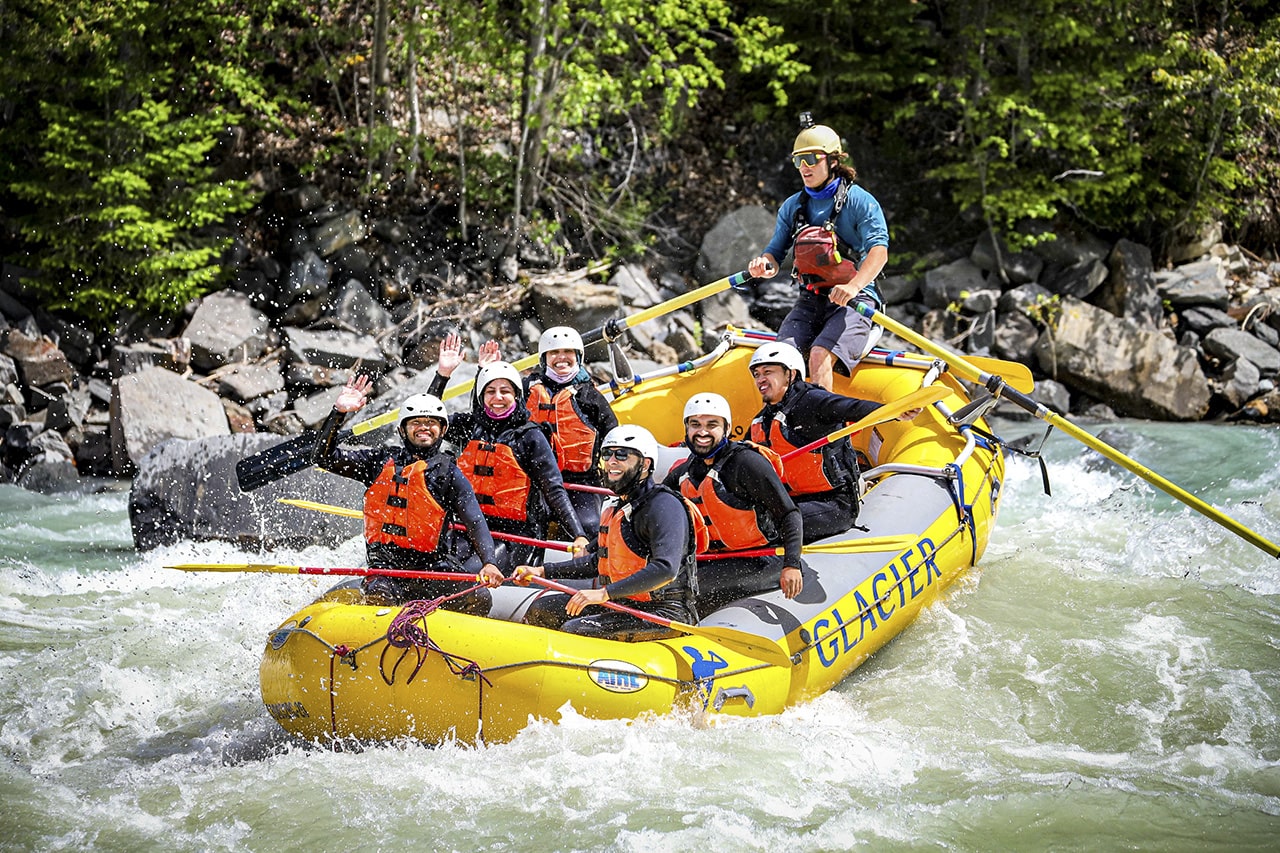
Kicking horse rafting banff delivers some of the Rockies' most exhilarating Class III-IV rapids, with the river's snowmelt-fed channels carving through Golden's dramatic canyon walls just 90 minutes west of Banff. Commercial operators run half-day trips that typically include wetsuit rental, safety briefing, and transport from staging points, with prices ranging from CAD 100–140 per person depending on season and group size. The river access itself is free, but guided tours are the practical option for anyone without technical whitewater experience. The payoff is immediate: big water, continuous wave trains, and legitimate hydraulics that demand active paddling—this isn't a scenic float. It's a strong fit for adventure travelers and anyone chasing adrenaline in the Canadian Rockies, though families with young children or visitors seeking a gentler introduction to river trips may find the intensity overwhelming. For confident paddlers, the Kicking Horse River whitewater experience justifies the drive and the cost.
Bottom line: If you want real whitewater action in the Rockies, kicking horse rafting banff tours deliver the goods—just come ready to paddle hard and get soaked.
They complement each other; most visitors who do both call the Kicking Horse the more thrilling choice for high-alpine adrenaline, whereas the Kananaskis provides a accessible entry point for beginners booking kicking horse rafting banff tours.
|
Top pick Kicking Horse River |
Kananaskis River | |
|---|---|---|
| River Difficulty | Class III-IV | Class II-III |
| Intensity Level | High adrenaline | Moderate pace |
| Target Audience | Adventure seekers | Families and beginners |
| Water Source | Glacial melt | Hydroelectric dam controlled |
| Proximity to Banff | Approx. 1.5 hours | Approx. 45 minutes |
| See tickets & prices |
Verdict: Choose the Kicking Horse River if you want intense glacial rapids, or opt for the Kananaskis River if you prefer a convenient, gentler experience when searching for kicking horse rafting banff tickets.
Hand-picked experiences loved by thousands of travelers
5.5 to 9 hours
Free Cancellation
Paddle through class II-III rapids on a family-friendly wilderness journey through the Canadian Rockies
11 hours
Free Cancellation
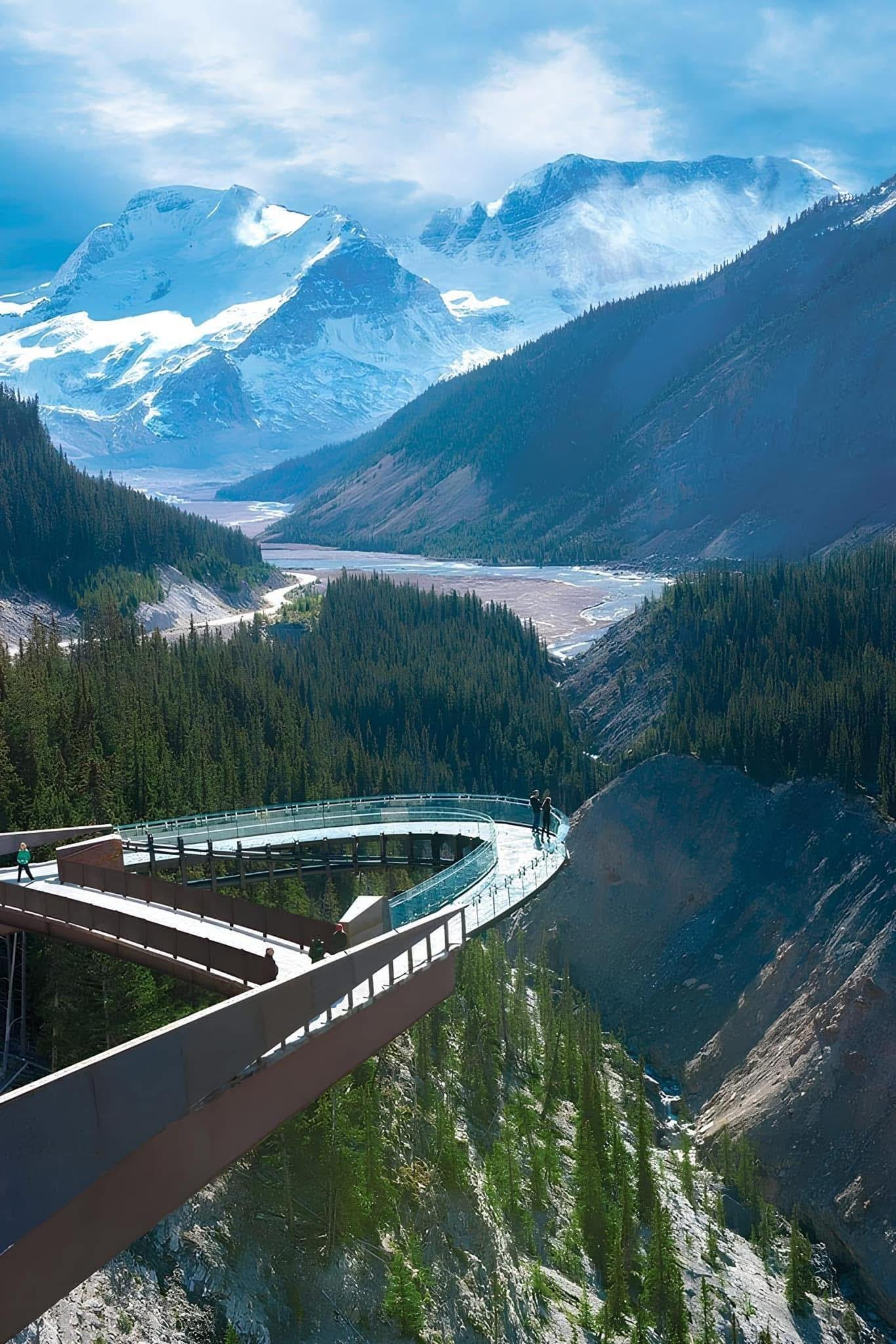
Journey through glacier country, alpine lakes, and the famous glass-bottomed Skywalk in one epic day.
2.5 - 4 hours
Free Cancellation
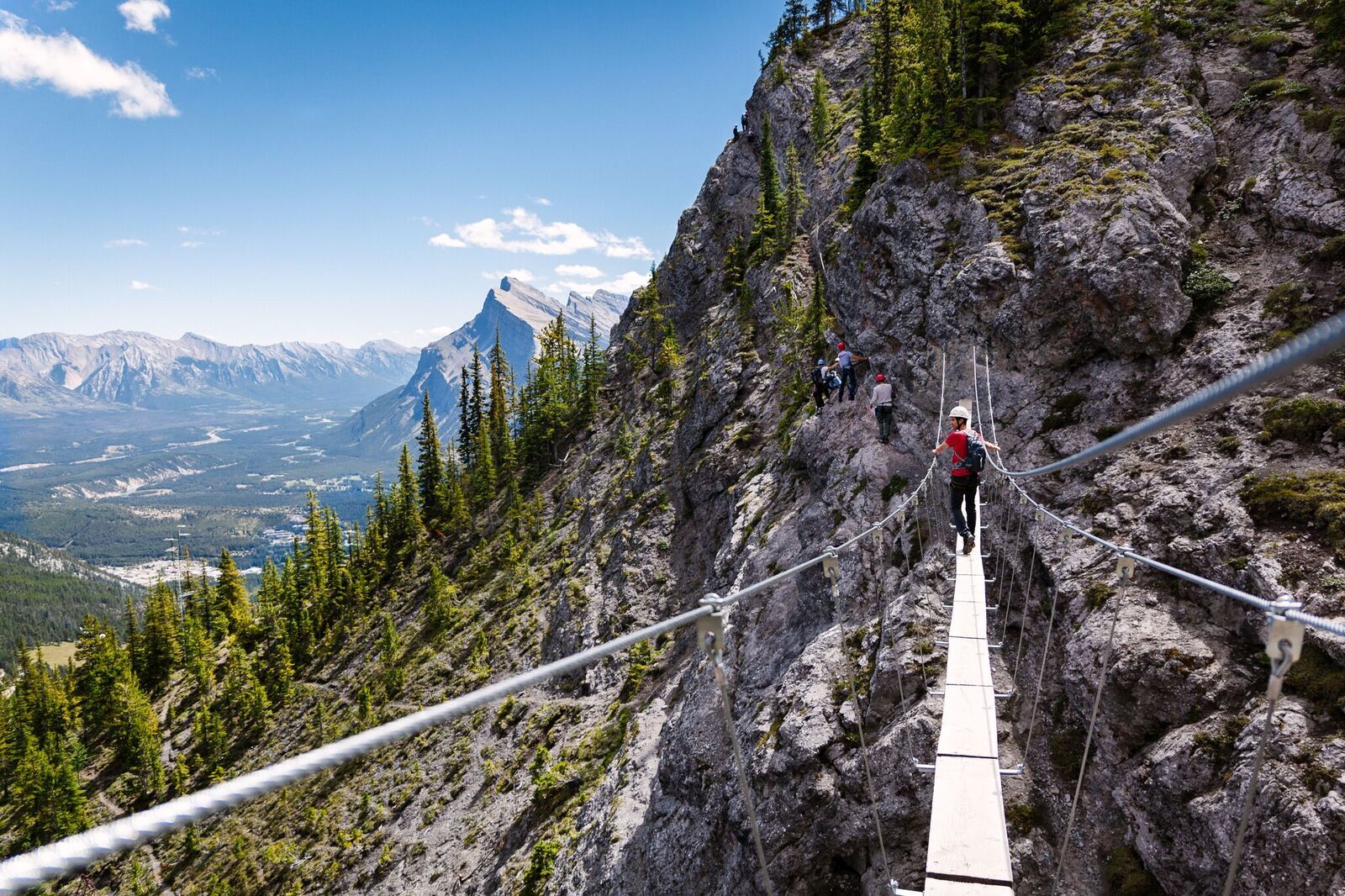
Scale iron-rung routes on Banff's cliffs with a guide—no climbing background required.
7 hours
Free Cancellation
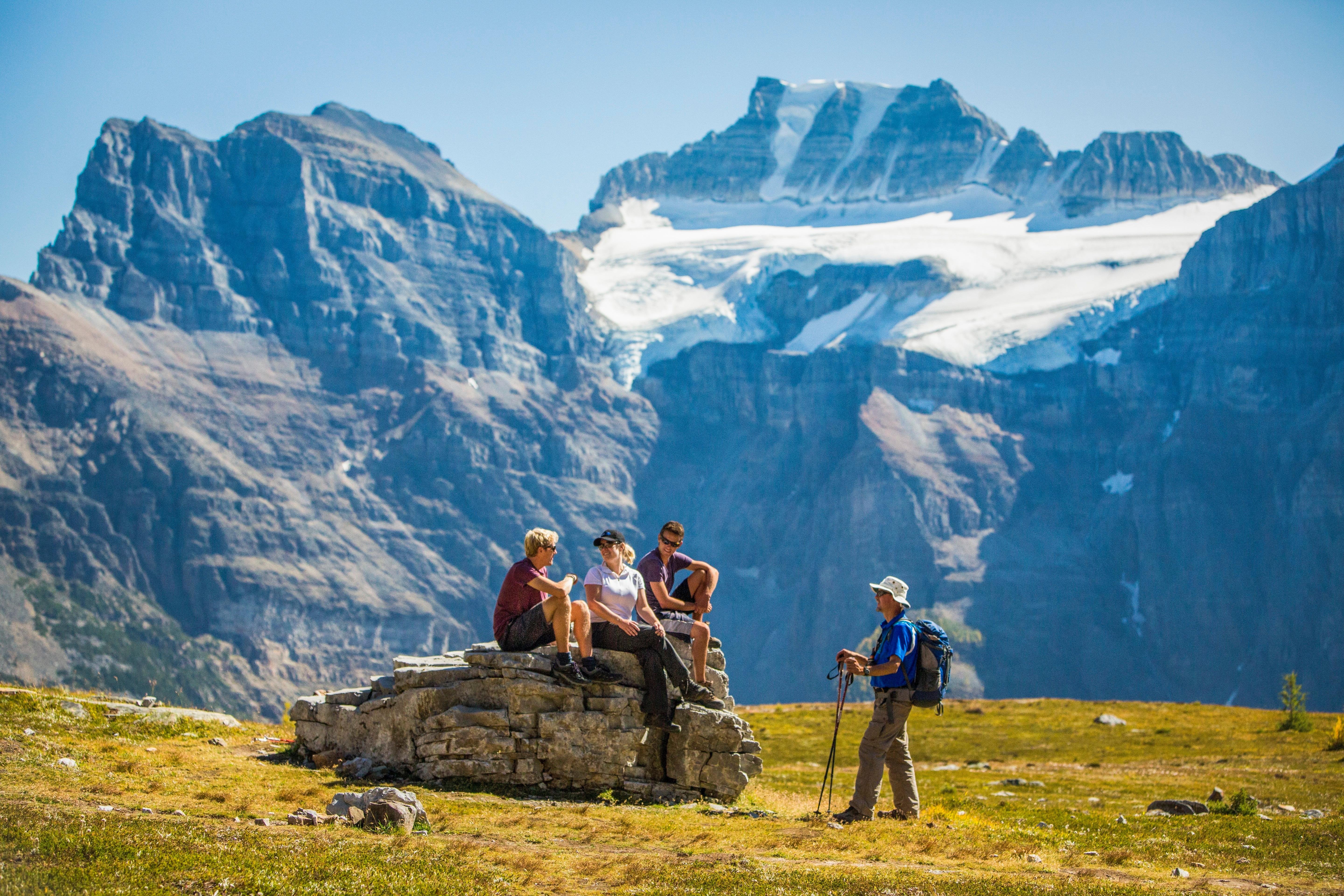
Full-day guided trek through alpine valleys, glacial landscapes, and iconic Rocky Mountain trails
2 hours
Free Cancellation
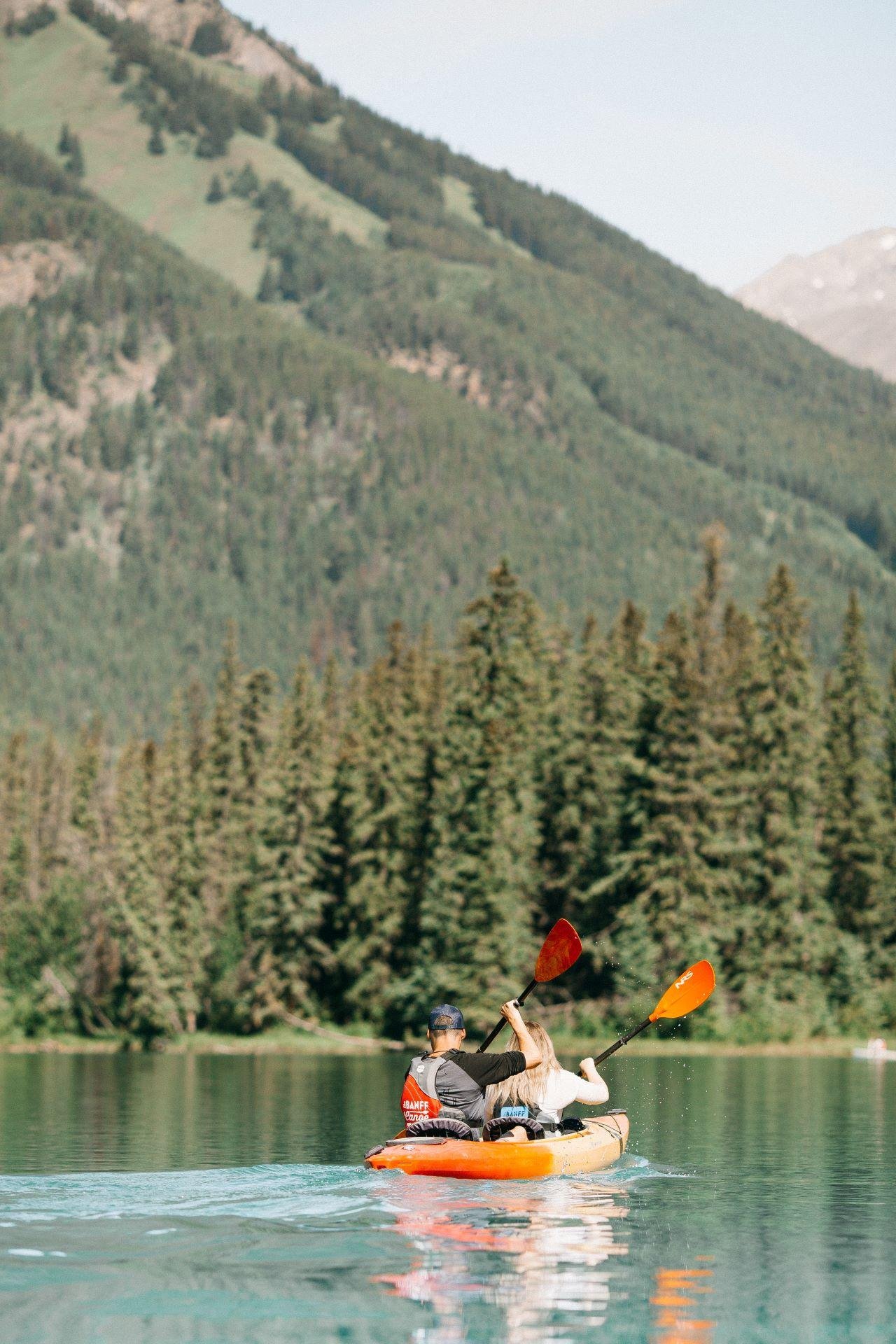
Paddle tranquil waters before the crowds arrive on this guided two-hour kayaking adventure in Banff.
1 hour
Free Cancellation
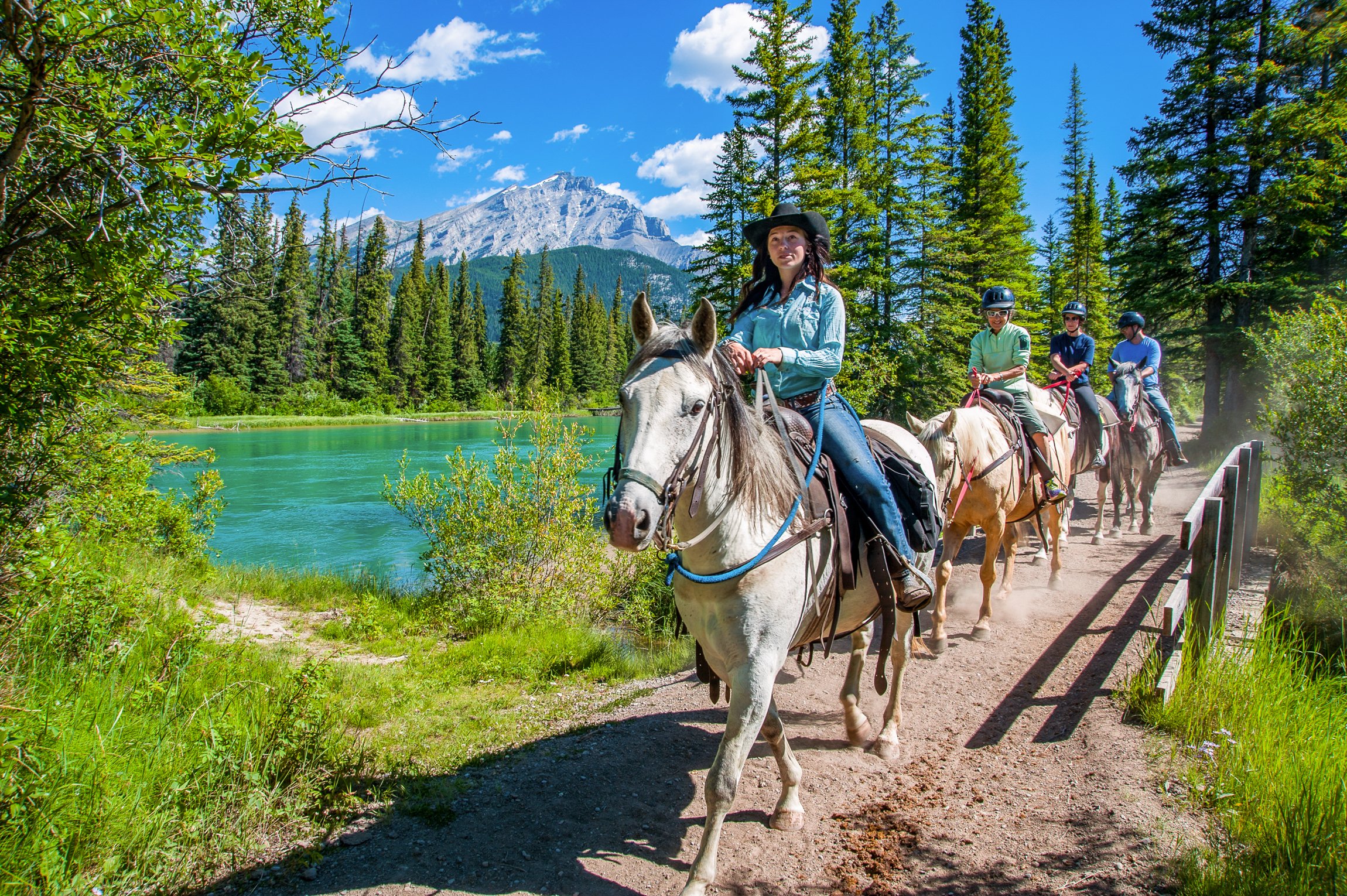
Explore Banff's riverside trails on horseback with mountain views and historic landmarks along the way
3 hours
Free Cancellation
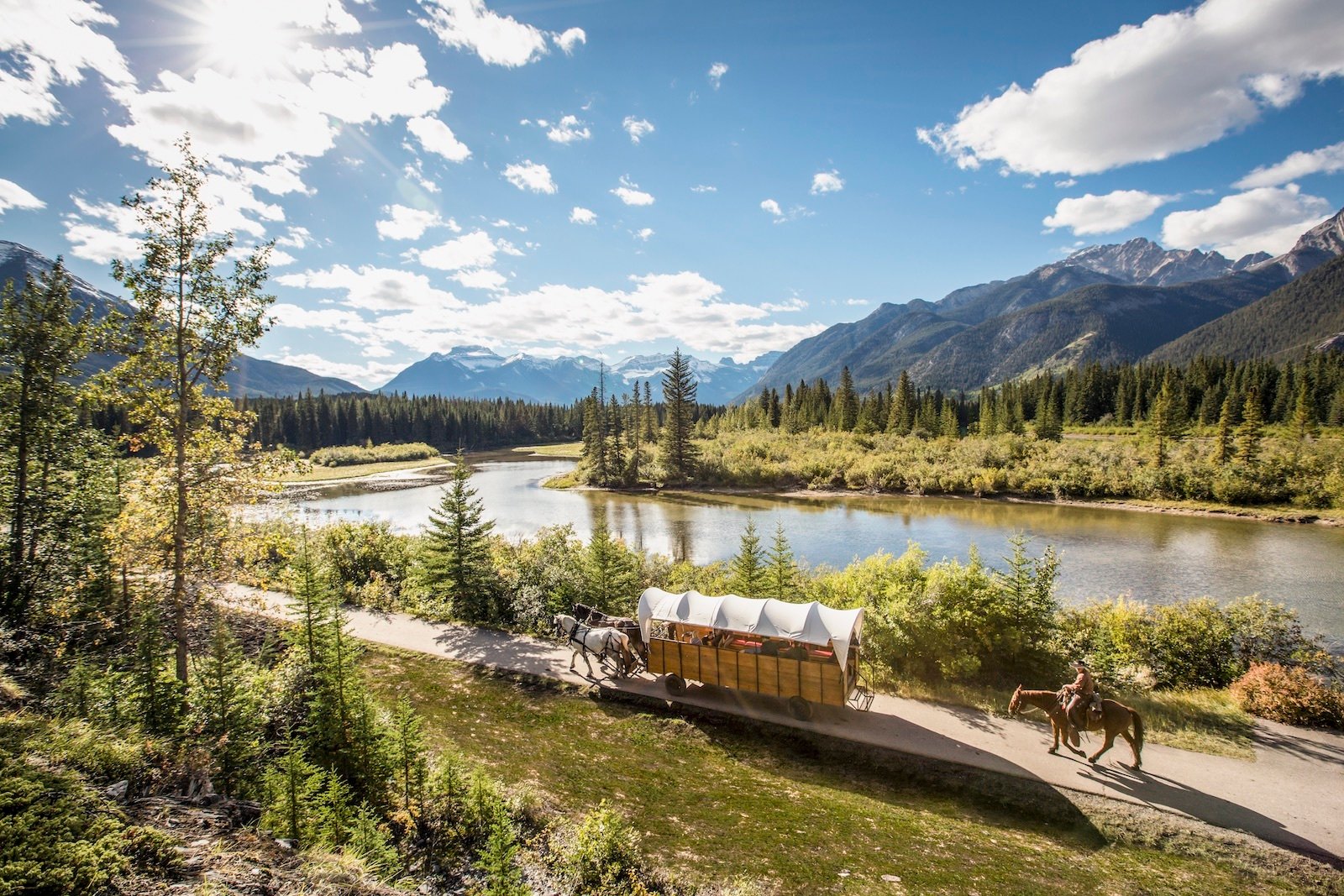
Horse-drawn wagon journey along the Bow River with cooked-to-order steak dinner in the backcountry
4 hours
Free Cancellation
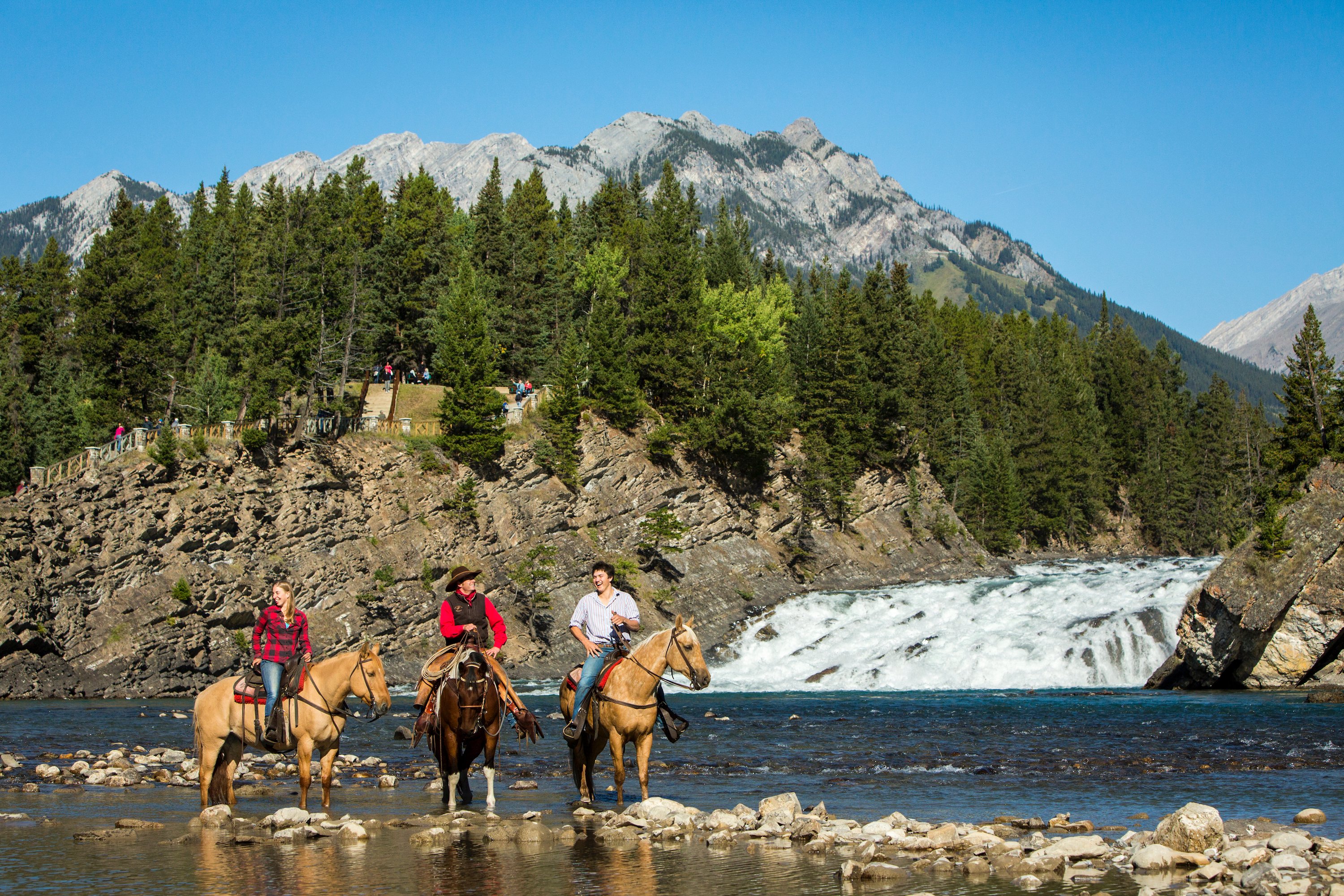
Four-hour guided ride through Banff's backcountry with river crossings and alpine panoramas
Experience the most challenging Class 4 rapids which provide the highest thrill for rafting enthusiasts. The canyon walls reach heights of up to 300 meters.
This section offers a balanced mix of thrilling waves and scenic river views perfect for mixed-skill groups. It is known for its consistent water flow throughout the season.
Features calmer waters and beautiful alpine scenery, ideal for families and those looking for a relaxing river experience. This section is often quieter than the lower reaches.
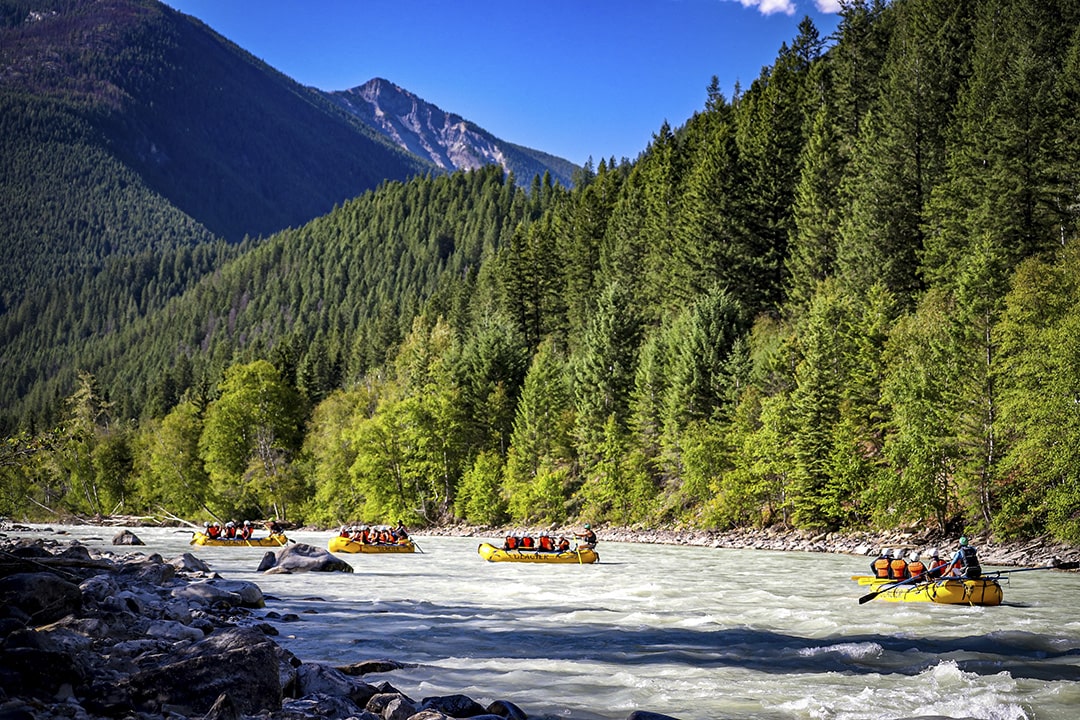
You depart Golden mid-morning, driving south along the Kicking Horse valley as the river narrows into canyon walls. At the put-in beach, your guide fits you with a wetsuit, splash jacket, helmet, and life vest — the glacier-fed water runs cold even in July.
After a 15-minute safety talk, you practice paddle commands in the eddy: forward, back, high-side. The raft seats six paddlers plus your guide at the stern.
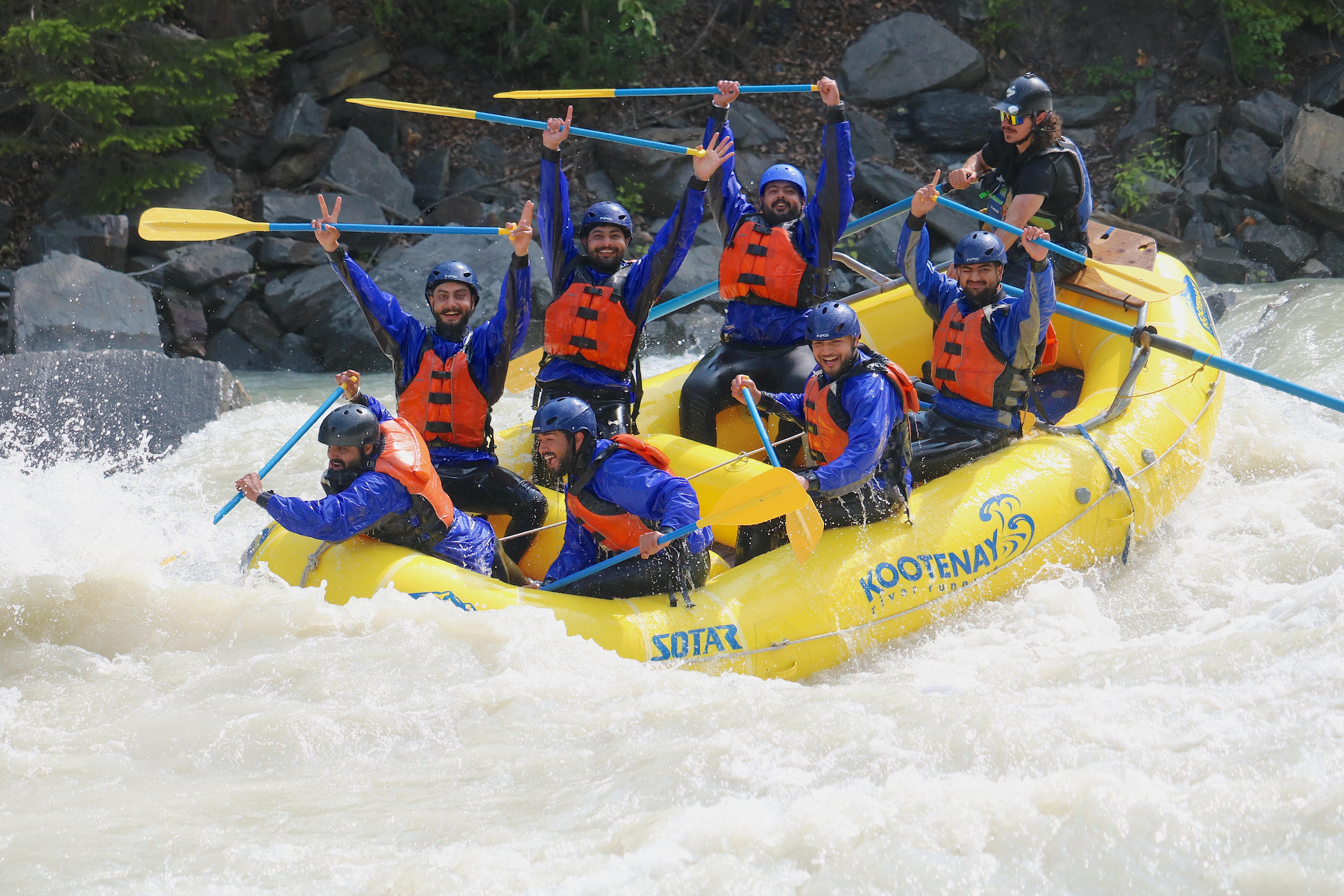
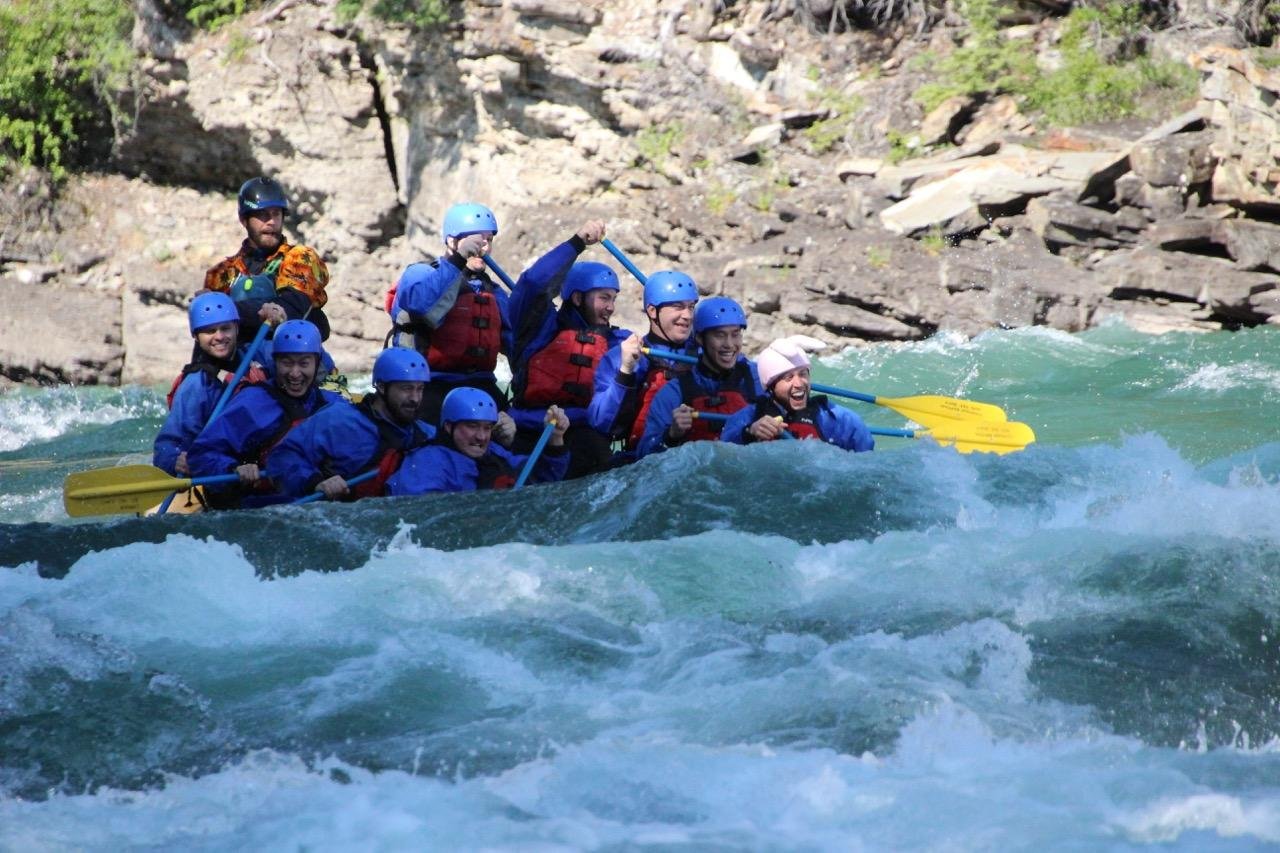
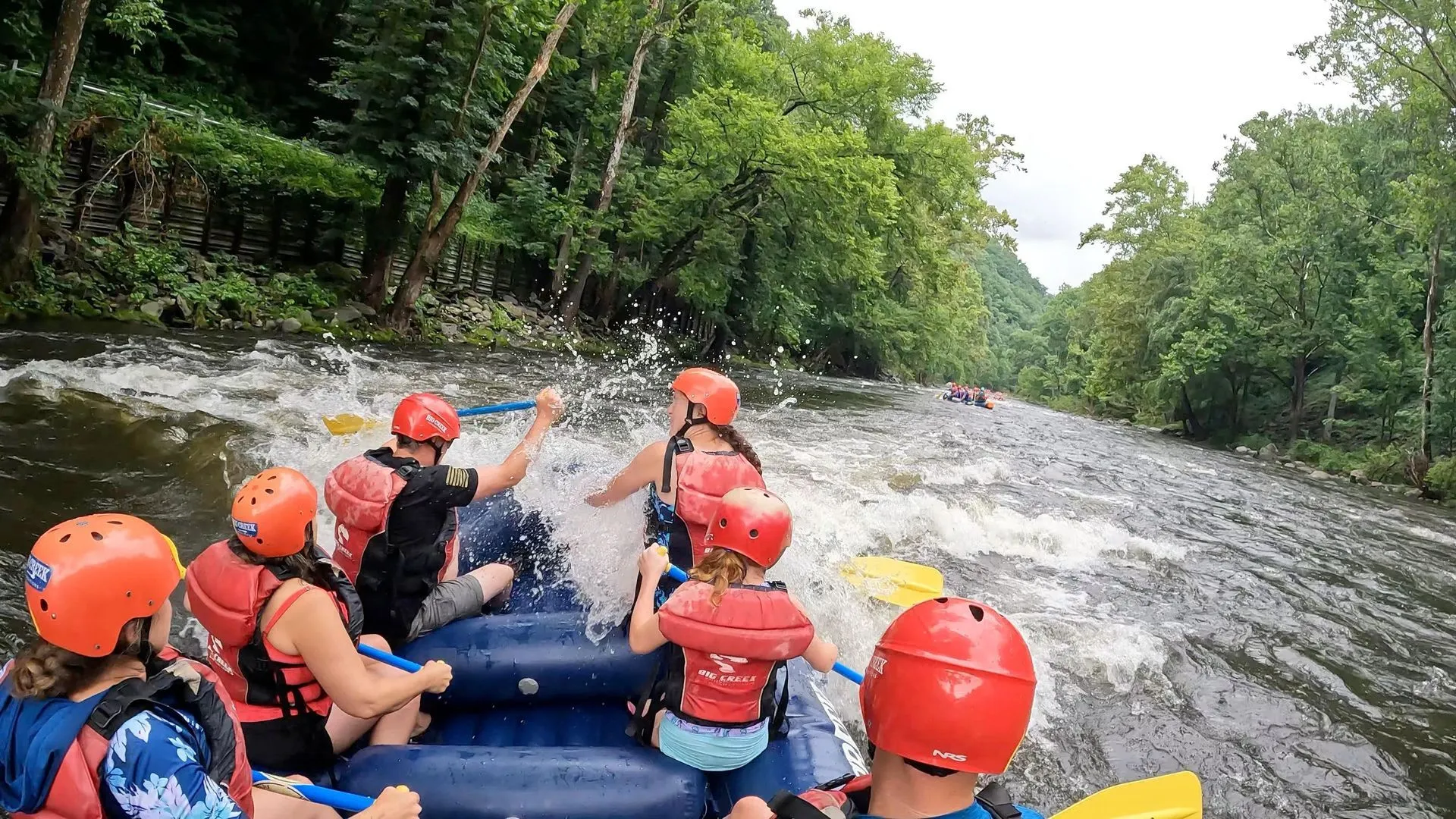
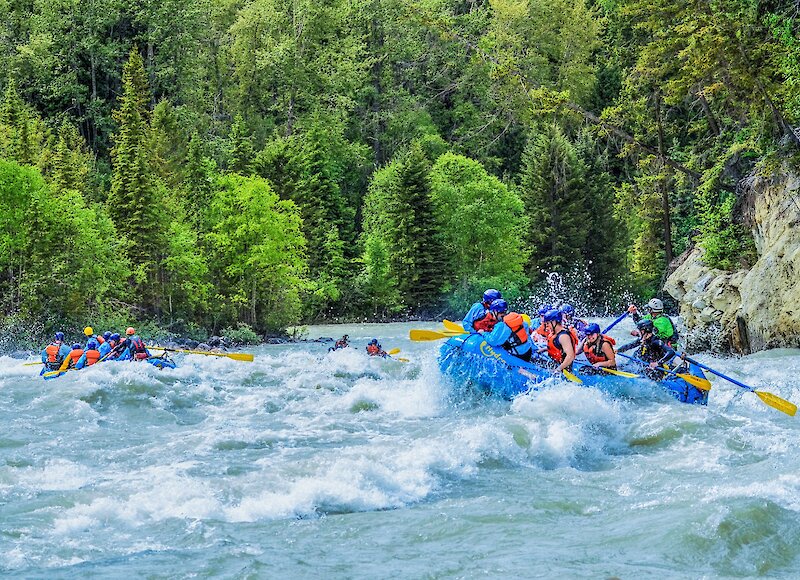
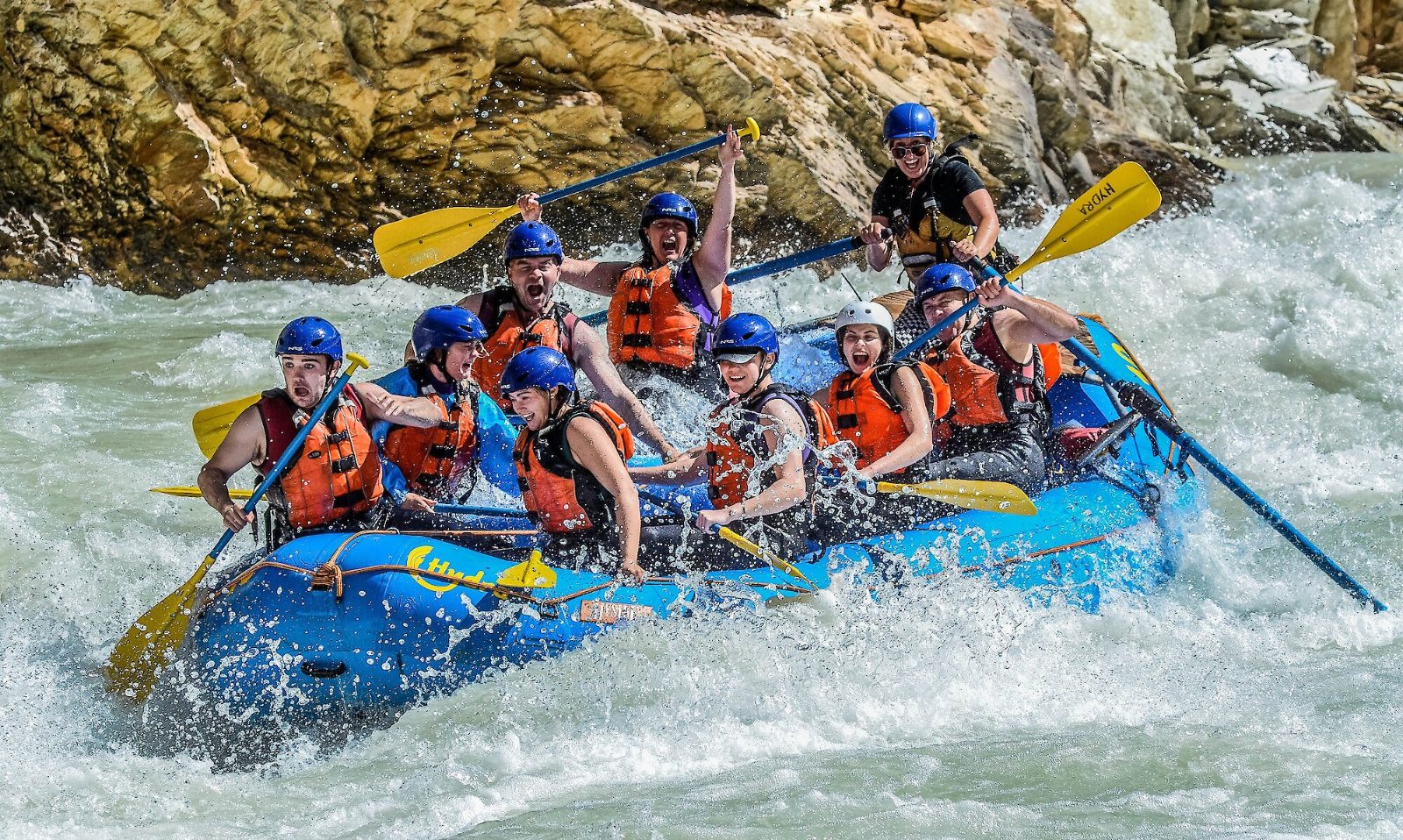
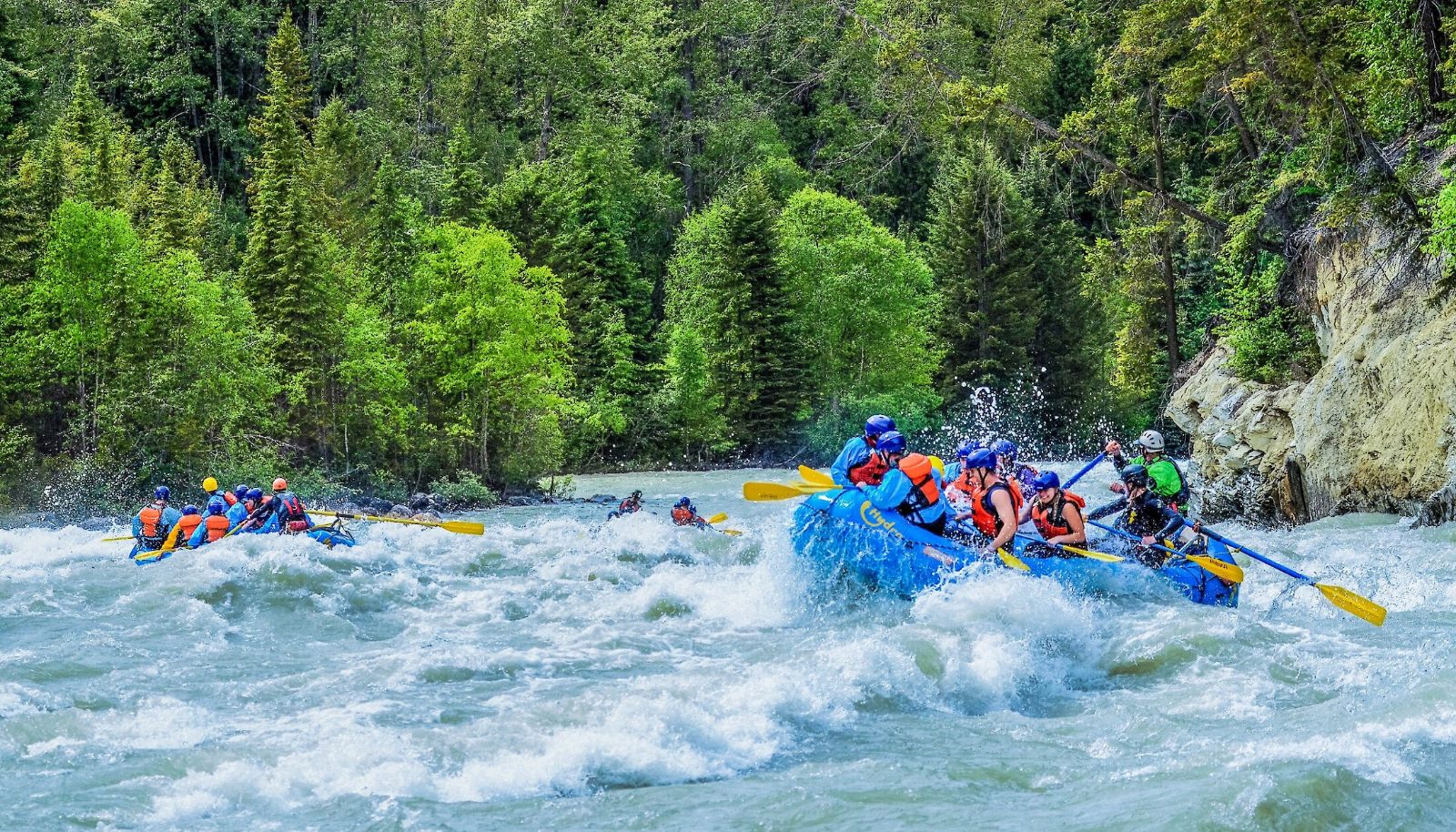
Portage rapid announces itself with a low roar. You dig in as the bow lifts, then drops into a trough that sends whitewater over the gunnels. Shotgun follows three minutes later, a sharp ledge that requires a hard left pull to avoid the pourover. Between rapids, you drift under pine-topped cliffs, scanning the south slope for bighorn sheep. Man Eater rapid, the canyon's largest, demands a precise entry line — your guide calls high-side as the raft tilts 45 degrees, and you throw your weight onto the downstream tube to keep it upright.
Roller Coaster, the final rapid, stacks three waves in quick succession. You punch through soaked and breathless. The canyon opens into a gravel bar where you beach, strip off helmets, and eat sandwiches while the river flattens toward the Columbia confluence.
All the details about your upcoming adventure in one place
The Kicking Horse River drops 150 metres through a granite canyon in the first 16 kilometres of its course, producing some of the most consistent Class III and IV whitewater in the Canadian Rockies.
Fed by glacial melt from the Wapta Icefield, the river maintains strong flows from May through September, carving through walls that rise 30 metres above the waterline. The name traces to an 1858 incident when geologist James Hector was kicked unconscious by his pack horse near the river's confluence with the Beaverfoot — his Stoney guides believed him dead until he revived hours later.
Commercial rafting operations launched on the Kicking Horse in the early 1980s, shortly after the Trans-Canada Highway made Golden accessible as a staging point. The river remains one of the few in British Columbia where Class IV sections are navigable by first-time rafters under guide supervision. The Middle Canyon, a 14-kilometre stretch, concentrates the river's gradient into seven named rapids: Portage, Shotgun, Man Eater, and the technical finale, Roller Coaster. Water temperatures hold between 6 and 10 degrees Celsius through the season, requiring full wetsuits and splash gear even on warm July afternoons.
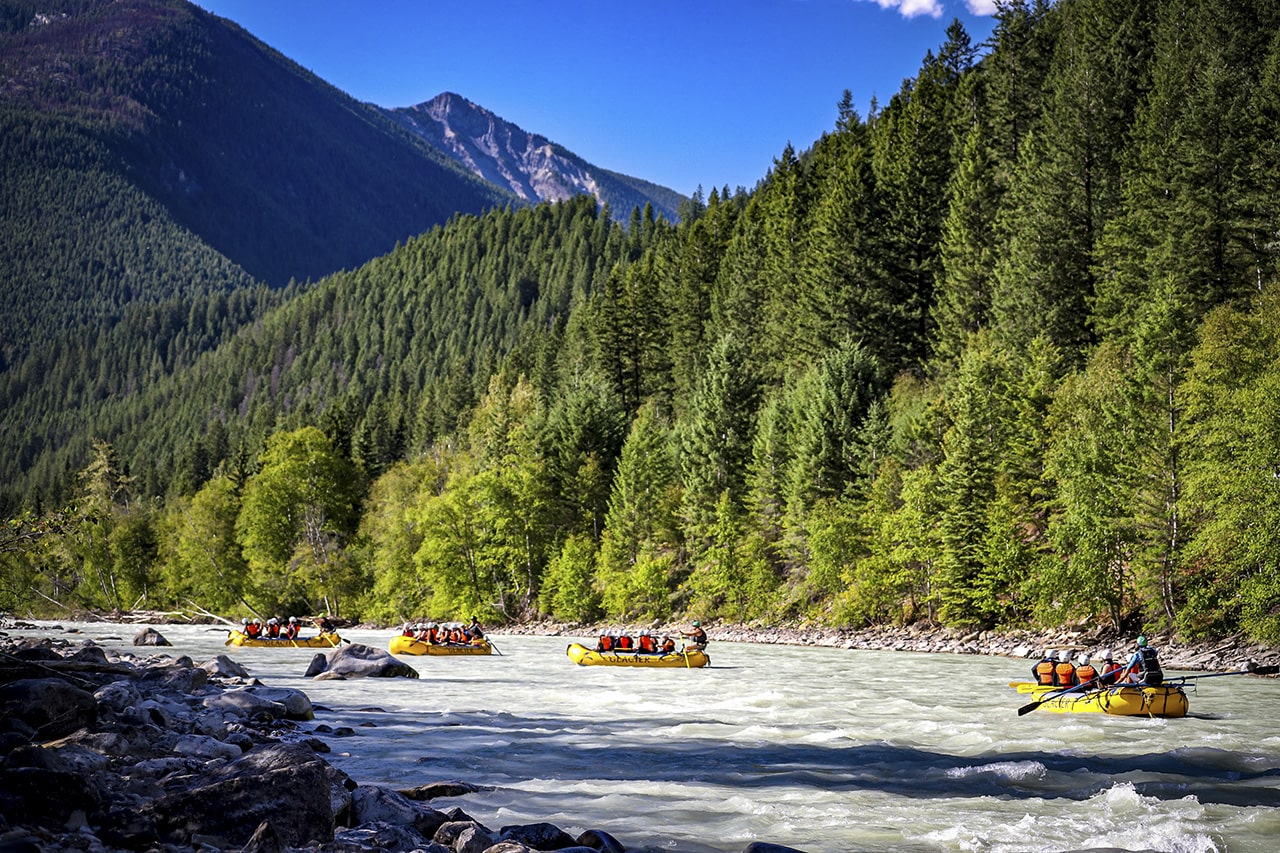
Today, kicking horse rafting banff operations run from Golden, 80 kilometres west of Banff townsite via the Trans-Canada. Most outfitters offer half-day Middle Canyon trips and full-day Lower Canyon runs that extend 27 kilometres to the confluence with the Columbia River. The Lower Canyon trades intensity for volume, its broader gradient allowing time to observe bighorn sheep on the south-facing slopes and osprey nests anchored to standing deadwood. Rafting season peaks between late June and mid-August when snowmelt stabilizes and air temperatures favour immersion sports. September brings lower water levels and copper aspens along the canyon rim, extending visibility into the side draws where black bears forage before denning.
Whitewater classification on the Kicking Horse shifts with flow: spring runoff in late May can push sections into Class V territory, while August typically delivers reliable Class III-IV water that rewards paddle coordination without demanding prior river experience. All commercial trips include riverside safety briefings and practice runs in calm eddies before entering the canyon's committed sections.

The Kicking Horse drops 150 metres through granite in its first 16 kilometres, carving Class IV whitewater that remains navigable by first-time rafters under guide supervision.
Operators provide wetsuits, life jackets, and helmets for all rafting trips. Participants should wear a swimsuit or synthetic base layer under the gear.
Most tour bases offer secure lockers or storage areas for personal belongings. Avoid bringing valuables or bags onto the raft itself.
Waterproof cameras or GoPros with chest mounts are recommended for capturing the rapids. Professional photography is often available for purchase from kicking horse rafting banff tours operators.
Age and weight restrictions are strictly enforced by all operators for safety. Families must check these requirements before booking kicking horse rafting banff tickets.
Whitewater rafting requires moderate physical exertion and agility. Contact specific kicking horse rafting banff operators to discuss individual mobility needs.
Consumption of alcohol is strictly prohibited before and during rafting trips. Some operators provide snacks or meals post-tour at their base locations.
Opening hours
09:00–18:00
Address
Kicking Horse River, Golden, BC, Canada
Accessibility
Varies by operator
Best arrival
09:00–13:00
Storage
Check with operator
Navigation
Kicking Horse River base
Car · 150 min · Fuel costs apply
Follow Trans-Canada Hwy toward Golden for easy access to the river valley.
Bus · 180 min · Variable
Private shuttle services are available from Banff for group bookings.
Commercial operators typically require 24 to 48 hours notice for a full refund. The entrance fee of 0 CAD to the Kicking Horse River does not apply to private rafting bookings.
Recommended time
4-5 hours
Most visitors traveling for kicking horse rafting banff should allocate half a day to account for gear fitting, safety briefings, and transit to the river. Arriving between 09:00–13:00 is essential as morning sessions offer optimal water levels and weather conditions for whitewater rafting. While the river itself has 0 CAD entry, booking kicking horse rafting banff tours through a commercial operator is required to access the water safely. By choosing early kicking horse rafting banff tickets, you avoid the peak congestion often seen in the early afternoon.
Crowd levels through the day
Weather · crowds · average price — dots go green to amber to red as each metric rises.
High water levels occur in June, offering the most intense and fast-paced whitewater experience.
Water levels stabilize by July and August, providing great conditions for families and intermediate rafters.
Water levels decrease in September, making the river more technical and focused on smaller, specific features.
Reserve your kicking horse rafting banff spot at least two weeks in advance during summer months. This ensures you secure the specific intensity level you desire.
The Kicking Horse River earned its name in 1858 when geologist James Hector, part of the Palliser Expedition, was kicked by his packhorse while fording the turbulent waterway near present-day Field, British Columbia. Indigenous peoples—Ktunaxa, Secwepemc, and Stoney Nakoda—had navigated the river's corridors for millennia, using the valley as a seasonal travel route between hunting grounds. The Canadian Pacific Railway surveyed the canyon in the 1880s, ultimately choosing the treacherous Kicking Horse Pass for its transcontinental line; construction claimed dozens of lives as crews blasted ledges into vertical rock faces above the churning whitewater below. Commercial kicking horse rafting banff tours emerged in the early 1980s when outfitters recognized the river's Class III–V rapids as among the most challenging navigable whitewater in the Canadian Rockies. The stretch between Golden and the confluence with the Columbia River features continuous wave trains, hydraulic holes, and technical drops through narrow limestone gorges. Operators established put-in points at Beaverfoot and takeout zones downstream, formalizing half-day and full-day itineraries that balanced adrenaline with safety protocols. By the mid-1990s, provincial regulations required guide certification and equipment standards, professionalizing an industry that had grown from a handful of independent operators to a coordinated network. Environmental advocacy intensified in the 2000s as hydroelectric proposals threatened flow regimes critical to both rafting and salmon migration. Conservation groups documented how artificial drawdowns altered sediment transport and riparian habitat, prompting British Columbia to designate protected flow windows during peak season. Today kicking horse rafting banff experiences draw thousands annually, with shuttle services linking Golden and Banff to serve visitors seeking white-knuckle descents through one of North America's most storied river canyons. The river remains a living archive of geological violence, Indigenous passage, and the uneasy balance between recreation and preservation.
James Hector is kicked by his horse while crossing the river, giving the waterway its enduring name.
Canadian Pacific Railway blasts through Kicking Horse Canyon, losing dozens of workers to rockfalls and rapids.
First commercial rafting outfitters begin guiding clients through Class IV rapids near Golden.
British Columbia mandates guide certification and safety standards, formalizing the whitewater industry.
Environmental groups secure protected flow designations to balance hydroelectric development with rafting access.
Shuttle networks connect Banff visitors to Golden put-in points, anchoring the river as a regional adventure hub.
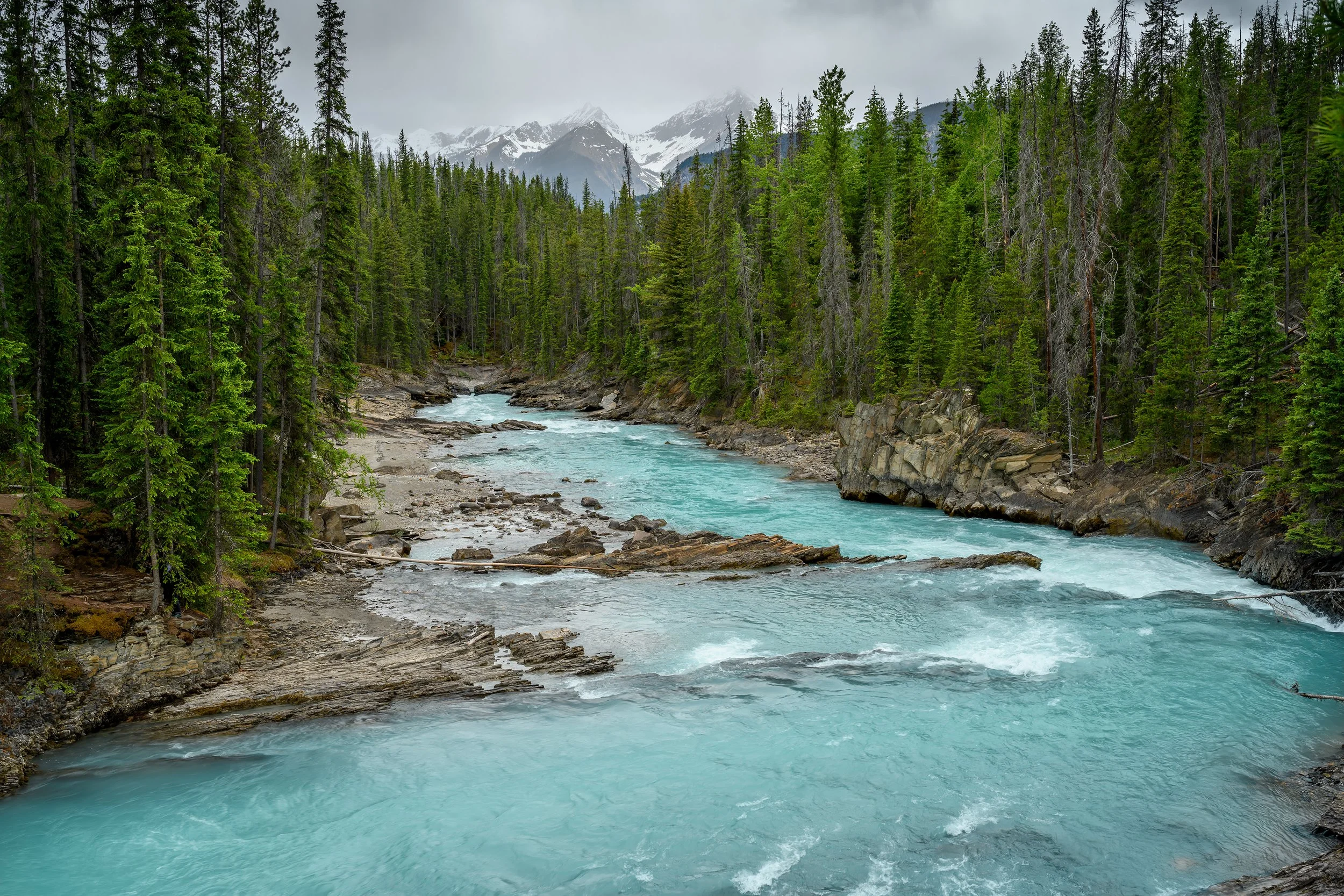
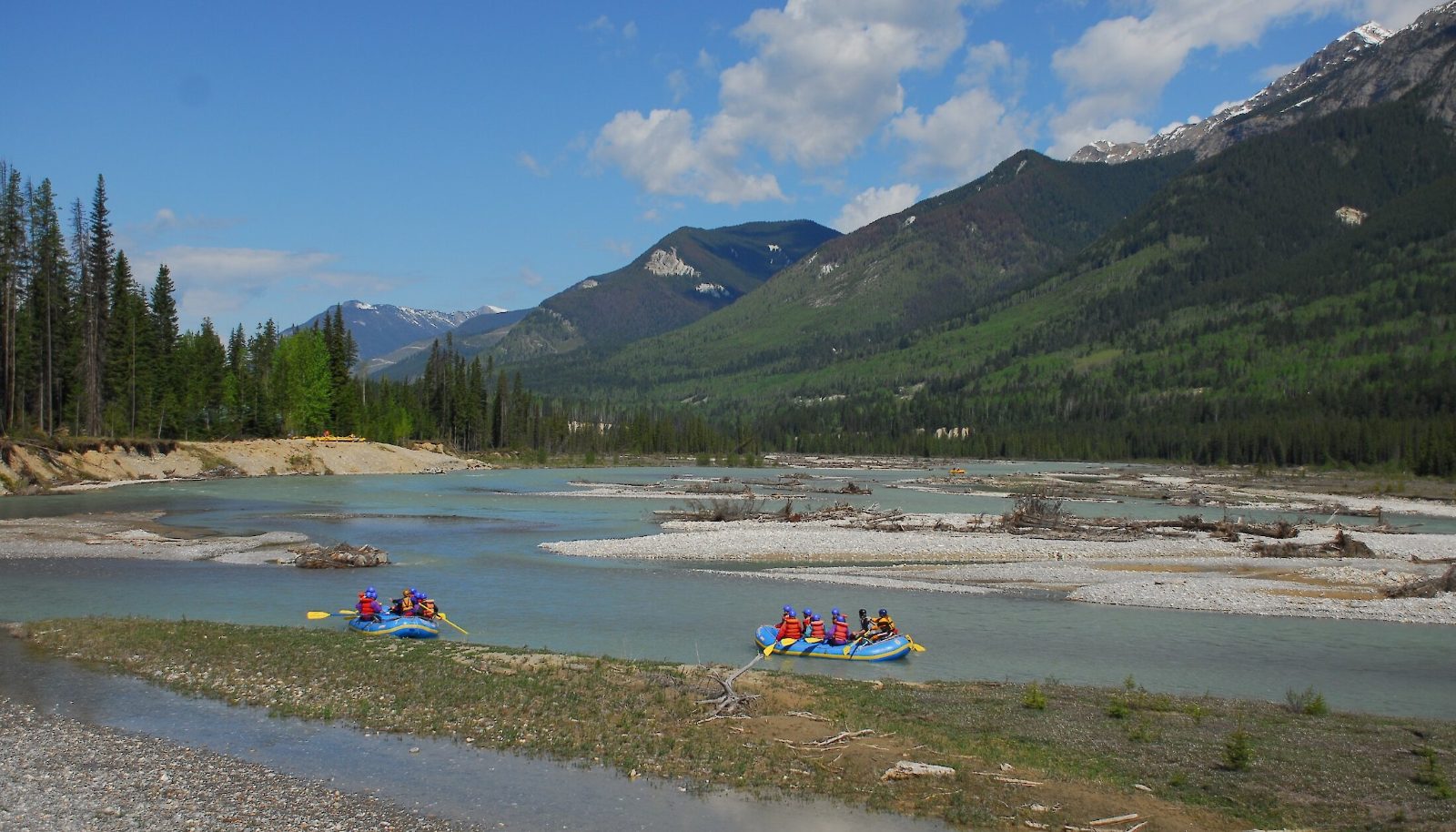
Stand at the shoreline where the glacial silt-heavy water meets the main river channel to capture the contrast of blue and grey currents. This spot is a favorite for those seeking to capture the scale of the valley before starting their kicking horse rafting banff excursion.
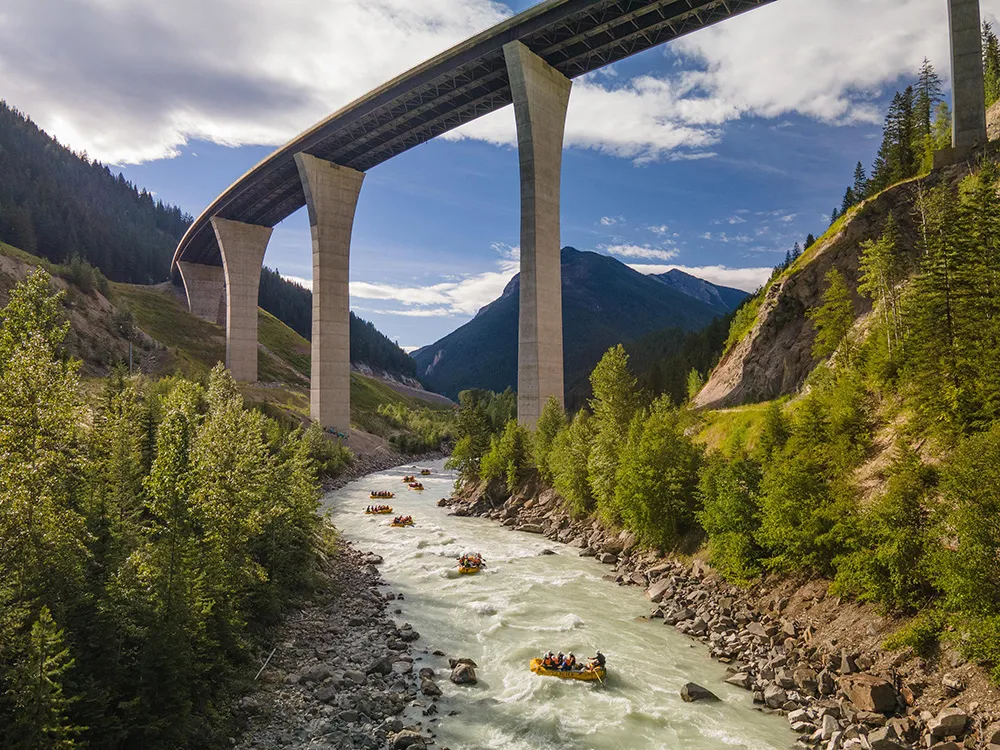
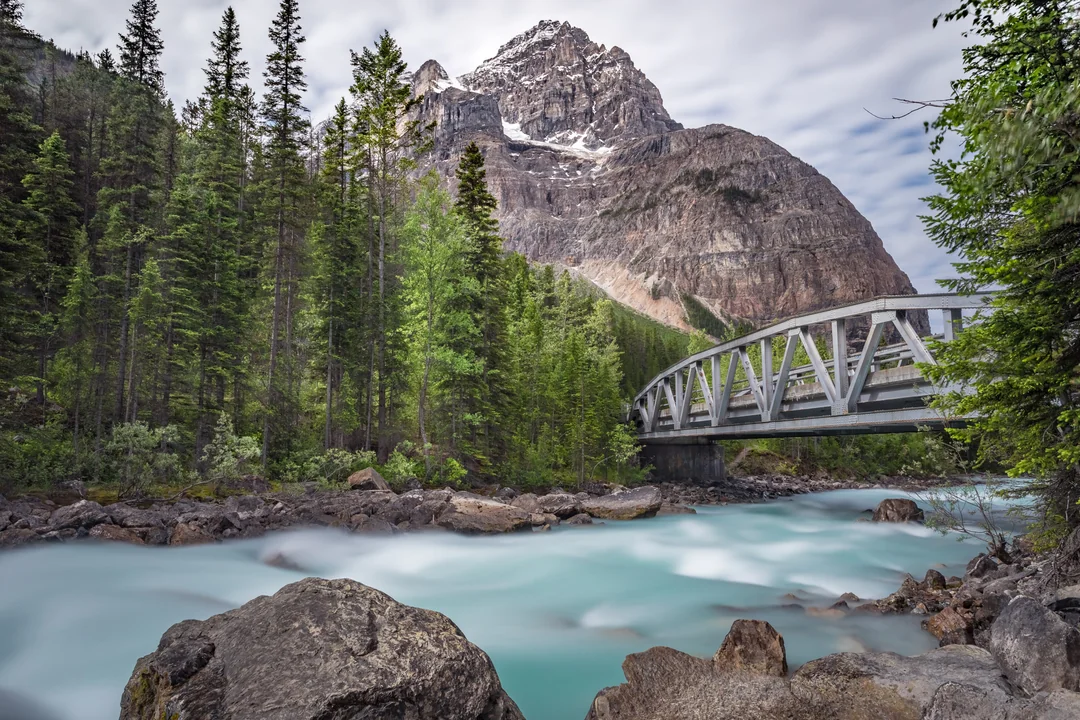
Position yourself on the bridge deck for a direct look down at the whitewater rapids as rafts navigate the narrow canyon section. This is a common vantage point for photographers documenting kicking horse rafting banff tours from above.
Located near the calmer stretches of the river, this area offers a mirror-like surface perfect for capturing the surrounding peaks and pine forests. It provides a peaceful backdrop for guests who have booked kicking horse rafting banff tickets and wish to photograph the serene side of the canyon.
Use a telephoto lens from this rocky outcrop to frame rafters hitting the turbulent waves of the upper canyon. This location is accessible via the main access roads often used by those searching for a professional kicking horse rafting banff tour.
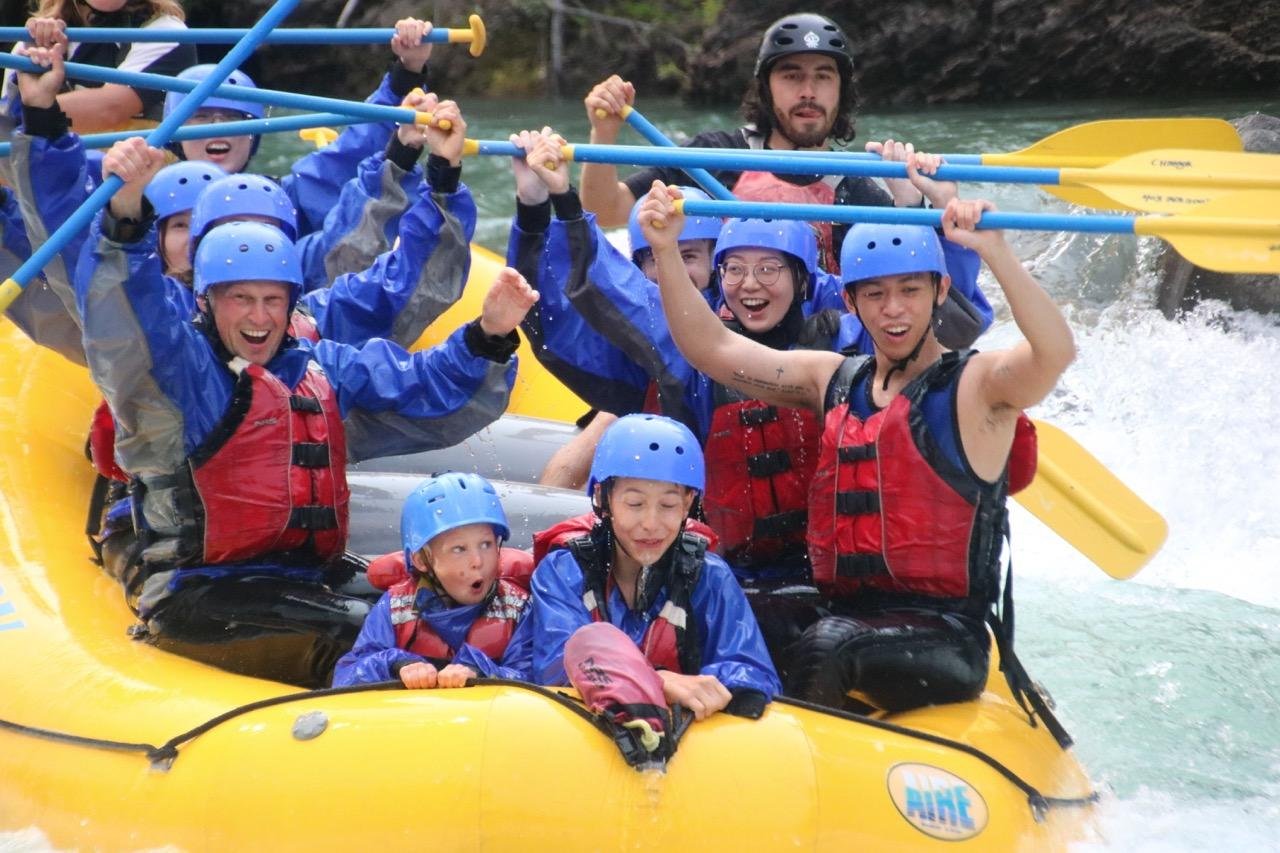
Families traveling from the mountain hub often find that kicking horse rafting banff provides a controlled yet exciting whitewater experience. Selecting an operator that specializes in kid-friendly canyon sections ensures you choose the right kicking horse rafting banff tours for your group.
Operators typically require children to be at least 6 to 12 years old and meet specific weight minimums, so confirm these requirements when purchasing kicking horse rafting banff tickets. Each commercial operator provides mandatory life jackets and helmets designed to fit younger adventurers securely.
All participants must wear professional-grade personal flotation devices and helmets, which are included in your kicking horse rafting banff tour. Parents should verify that staff provide a comprehensive safety briefing focused on river signals and paddle commands before departure.
Look for operators offering scenic, lower-intensity canyon trips that avoid the most technical class IV rapids to ensure a comfortable experience for younger rafters. These routes focus on the river's calm upper sections, ideal for families seeking an introduction to mountain waters.
The best arrival window for families is 09:00–13:00 to capitalize on peak water levels and favorable mountain weather. Ensure your group arrives at the staging area in Golden, BC, well in advance of your scheduled departure to complete necessary waivers.
Visitors planning a trip near kicking horse rafting banff will find that while river-side amenities are limited, the town of Golden offers numerous hearty dining options. Most rafters head into the town center shortly after their whitewater adventure to refuel.
Popular for post-rafting recovery with locally sourced dishes and craft beer. This spot is ideal for groups seeking a substantial meal after completing their kicking horse rafting banff tours.
Everything you need to know for your journey
The river is accessible 09:00–18:00 daily, though rafting tours are subject to operator availability. Always check with your commercial provider for specific tour times.
The Kicking Horse River has an entrance fee of 0 CAD; however, commercial rafting tours require a ticket.
Yes, but children must meet specific age and weight requirements defined by individual operators for safety.
The best arrival window is 09:00–13:00 to capitalize on optimal water levels and weather conditions for your kicking horse rafting banff experience.
Yes, provided it is a waterproof camera secured to your person or a chest mount. Do not bring loose cameras that could fall into the river.
Yes, most tour operators provide parking at their specific base locations in Golden.
Operators provide necessary technical gear like wetsuits, but wear a swimsuit underneath and bring a towel.
Yes, many operators offer introductory courses that are suitable for beginners who are comfortable in water.
Commercial operators typically allow for cancellations with 24 to 48 hours notice for a full refund.
A historic timber-frame bridge located in downtown Golden spanning the river.
A scenic championship golf course located near the river banks.
Renowned for the Burgess Shale fossil beds and emerald lakes.
An educational facility dedicated to wolf conservation.
Located near the river and highway access
Modern hotel with easy shuttle access
High-end lodging near Kicking Horse Mountain Resort
Affordable options for groups and families
Central area with various lodging options
Join thousands of happy travelers who have discovered this incredible experience
Book Your Experience Now